Fire restoration in Miami

Fire Damage Restoration Miami FL

Fast cleanup, smoke odor control, and rebuild coordination after a fire. We document the loss, protect what can be saved, and restore your property to safe, livable condition.

✓Smoke and soot cleanup ✓Odor source control ✓Written restoration scope
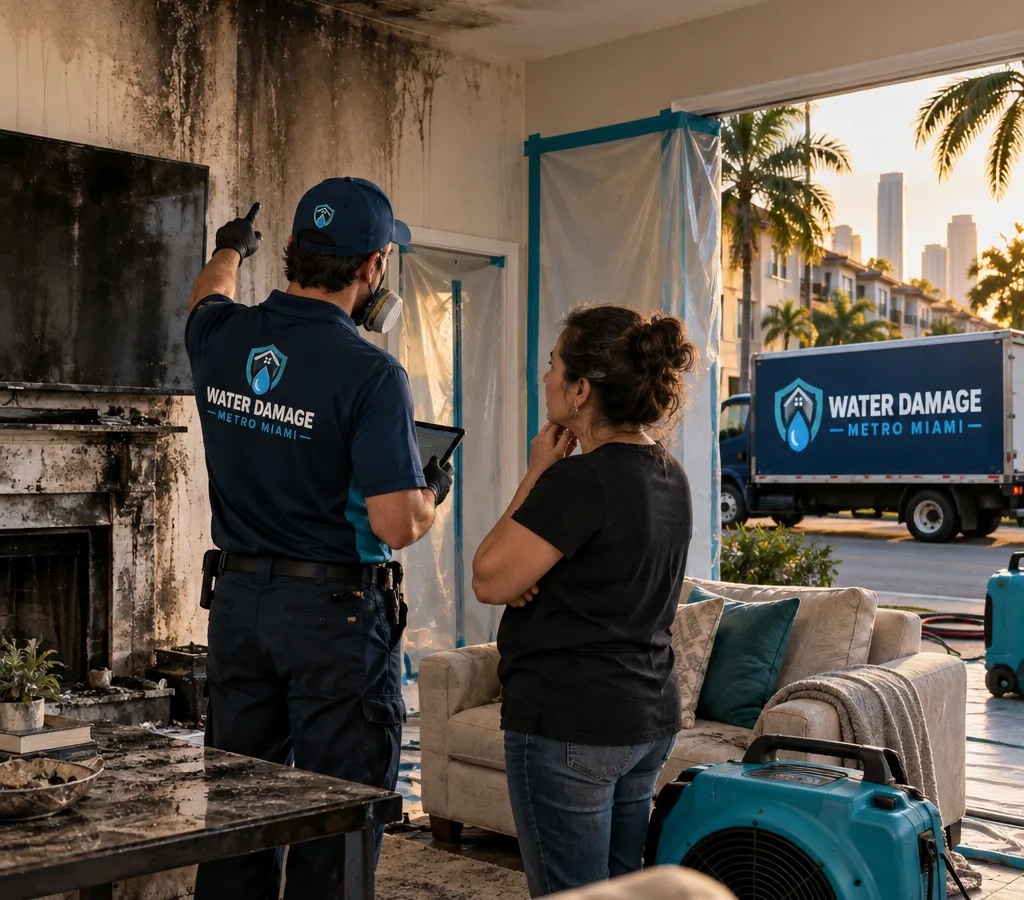
Miami restoration technician in protective equipment assessing fire and smoke damage in a residential living room with soot staining and containment

Fire damage is more than what burned

Fire damage restoration Miami FL work usually starts with what you cannot see: soot that travels through HVAC returns, smoke odor that sinks into porous materials, and water damage from suppression efforts. The first 24 to 48 hours matter because acidic soot residues can keep staining and corroding metals, electronics, and finishes if they are not removed correctly.

Water Damage Metro Miami responds across Miami with a straightforward plan: secure the property, evaluate what is salvageable, remove hazardous debris, clean and deodorize smoke residues, dry any water affected areas, and coordinate the repair work needed to bring the space back. When you reach out, we focus on stabilizing the situation first, then provide a written scope so you know what happens next.

Our team also works as a professional water damage restoration company in Miami when fire hoses or sprinkler discharge leave wet drywall, insulation, or flooring that needs proper drying and monitoring before repairs.
What miami fire damage restoration typically includes

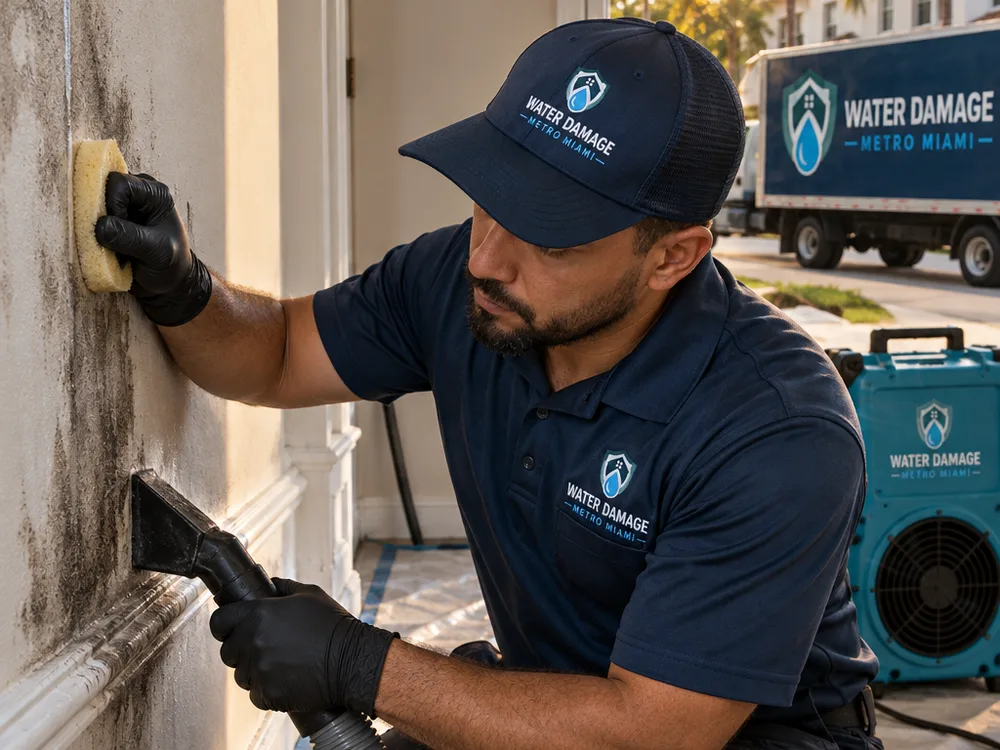
Technician cleaning soot residue from painted drywall and trim using a HEPA vacuum and sponge with an air scrubber operating nearby

A solid miami fire damage restoration job is built around inspection, containment, cleaning, and verification. We begin by identifying the type of residues present (dry soot, oily soot, protein residue from kitchen fires), then choose the right cleaning approach so we do not grind soot deeper into surfaces.

Common tasks include:

  • Emergency board-up and temporary protection for doors, windows, and openings created by firefighting.
  • Soot and smoke cleanup on walls, ceilings, framing, cabinets, and contents, using appropriate dry cleaning, wet cleaning, or abrasive methods when required.
  • HEPA-filtered air scrubbing and controlled demolition of unsalvageable materials.
  • Odor control using proven deodorization methods, including thermal fogging or hydroxyl treatment when appropriate for the structure and materials.
  • Water extraction and structural drying when sprinklers or hoses affected building materials.

In Miami, smoke often moves quickly through condos and multi-family buildings. We can coordinate access, staging, and work hours with property management so restoration stays organized and contained.

Cleanup and repair

Fire restoration miami: problems we solve during cleanup and repair

Smoke odor that keeps coming back

Odor usually means smoke particles are still in porous materials or the air system. We track the source, clean the right surfaces, and use targeted deodorization so the smell does not reappear after paint or new flooring.

Soot staining and surface damage

Soot behaves differently depending on what burned. We match the cleaning method to the residue type to reduce permanent staining on drywall, tile, grout, countertops, and fixtures.

Hidden contamination in HVAC and returns

Smoke can spread through ductwork and register boots. We identify affected pathways and recommend the appropriate level of cleaning so you are not recirculating odor and soot.

Water damage after firefighting

Wet insulation and trapped moisture behind baseboards can create secondary damage. We extract, dry, and monitor moisture before rebuild work begins.

Safety concerns and controlled demolition

Fire can compromise drywall, framing, and electrical components. We remove unsafe materials in a controlled way and keep the jobsite clean for the repair phase.

Documentation for claims and decisions

Clear notes, photos, and line-item scope help you and your adjuster understand what is being cleaned, what is being removed, and what repairs are necessary.

From stabilization to repair

Our fire damage restoration miami process

  1. 01

    Site stabilization and safety check

    We assess access, shutoffs, and hazards such as unstable materials, heavy soot, and water on floors. If needed, we install temporary protection such as board-up and basic containment to limit cross-contamination.

  2. 02

    Detailed inspection and scope

    We identify affected rooms, residue types, and salvageable contents. You receive a clear scope of work that separates cleaning, demolition, drying, and repairs so decisions are easier.

  3. 03

    Soot removal, cleaning, and air control

    We use HEPA filtration and appropriate cleaning methods for each surface. Air scrubbers and negative air setups are used when conditions call for them to keep soot from traveling to clean areas.

  4. 04

    Deodorization and verification

    After cleaning, we address odor at the source. We verify results by checking for remaining residues and odor persistence before moving into finishes and rebuild coordination.

  5. 05

    Repair and restoration coordination

    Once the structure is clean and dry, we coordinate the repair phase, which can include drywall replacement, trim, paint, flooring, and cabinet or fixture reinstalls, based on the approved scope.

Project pricing

How Much Does Fire Damage Restoration Cost in Miami?

Fire damage restoration in Miami typically ranges from about $3,000 to $15,000+, with small smoke-cleaning jobs often landing closer to $3,000 to $6,000 and larger losses involving demolition, drying, and rebuild work reaching $15,000 to $50,000+ depending on extent. The final price changes with the rooms affected, soot type, odor penetration, contents cleaning needs, water damage, access (high-rise or managed properties), and how much material must be removed and replaced. Exact pricing is confirmed after an on-site inspection and written scope.

Call for Emergency Help
Inside the work area

What to expect on a real restoration job

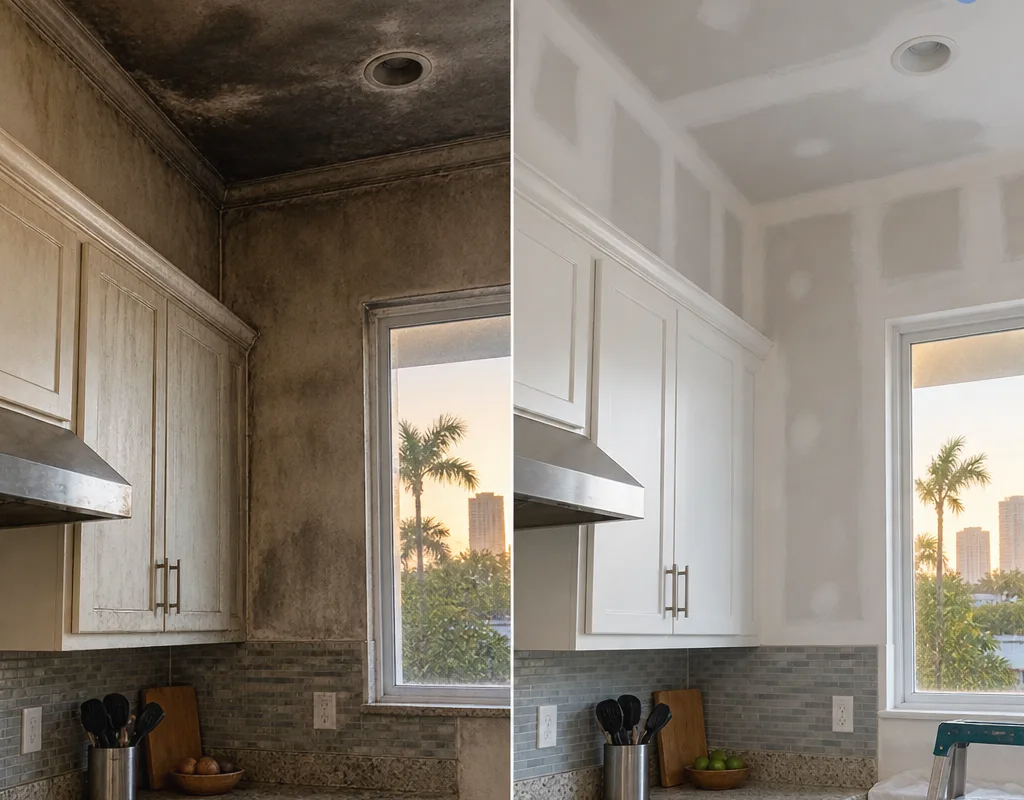
Before-and-after view of a smoke-stained Miami kitchen wall and ceiling cleaned, sealed, and prepared for repainting
Technicians setting up containment plastic and a negative-air machine at a condo hallway entrance to prevent soot migration
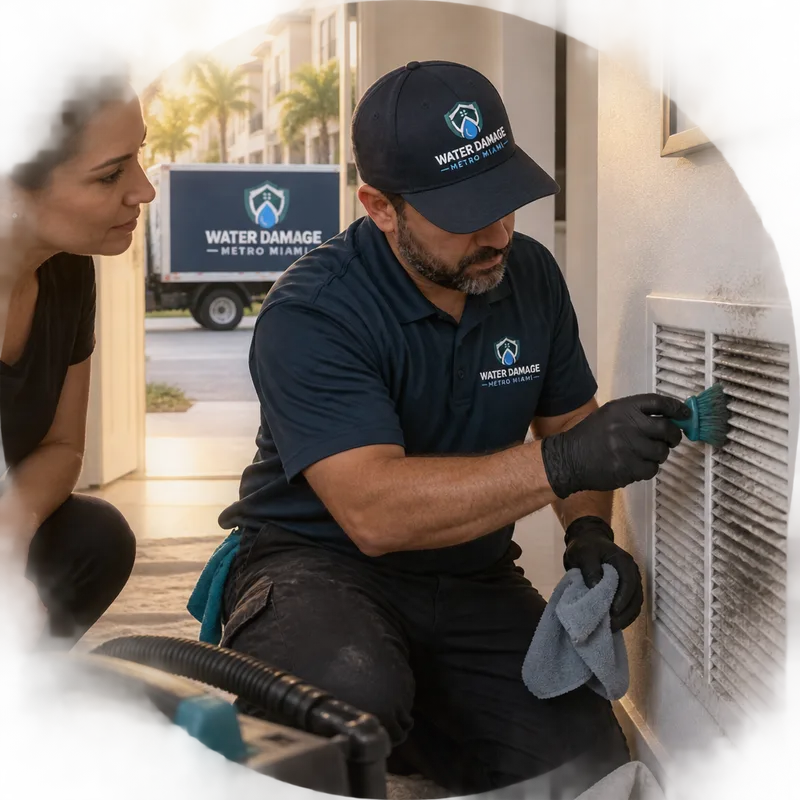
Close-up of careful soot cleaning on an HVAC return grille and surrounding wall without spreading residue

If your property has smoke odor, soot staining, or firefighting water damage, get an inspection and a written scope quickly so cleanup and repairs do not stall.

Fire restoration and smoke cleanup questions (Miami FL)

How fast should I start fire damage restoration in Miami after the fire is out?

Start as soon as the property is released as safe to enter, ideally within 24 to 48 hours, because soot residue can keep staining and corroding surfaces. Early stabilization also reduces odor absorption into drywall, insulation, fabrics, and HVAC pathways.

Can you remove smoke odor completely, or will I always smell it?

Smoke odor can usually be eliminated when the source is fully addressed, which means cleaning residues, removing unsalvageable porous materials, and using the correct deodorization method for the structure. Masking sprays rarely work long-term because they do not remove the particles causing the smell.

What is the difference between soot cleanup and full fire damage restoration?

Soot cleanup focuses on removing smoke residues and odor from surfaces and contents, while full fire damage restoration also includes demolition of damaged materials, drying from suppression water, and coordinating repairs to rebuild affected areas. Many Miami projects include both because smoke travels beyond the burn area.

Do you work with insurance for fire damage restoration in Miami FL?

Yes, we can provide photos, notes, and a line-item scope that supports the claim process and helps avoid misunderstandings about what was cleaned versus replaced. Coverage and approvals come from your policy and adjuster, but clear documentation keeps decisions moving.

Is it safe to stay in the home during smoke damage restoration?

It depends on the affected areas and the level of soot and odor, but many situations are safer with temporary relocation during demolition, heavy cleaning, and air control. We can explain the containment plan and what areas, if any, can remain occupied based on the on-site conditions.

What items can usually be saved after a fire and smoke event?

Many hard, non-porous items can be cleaned, while porous materials like insulation, some textiles, and heavily smoke-impacted papers often cannot. Salvageability depends on residue type, heat exposure, and how long soot and odor have been sitting, which is why early inspection matters.

Need fire damage restoration now?

Tell us what happened and what areas were affected. We will schedule an inspection, outline the cleanup and repair steps, and help you move from emergency stabilization to a finished restoration.

Call for Emergency Help