Containment that prevents cross-contamination
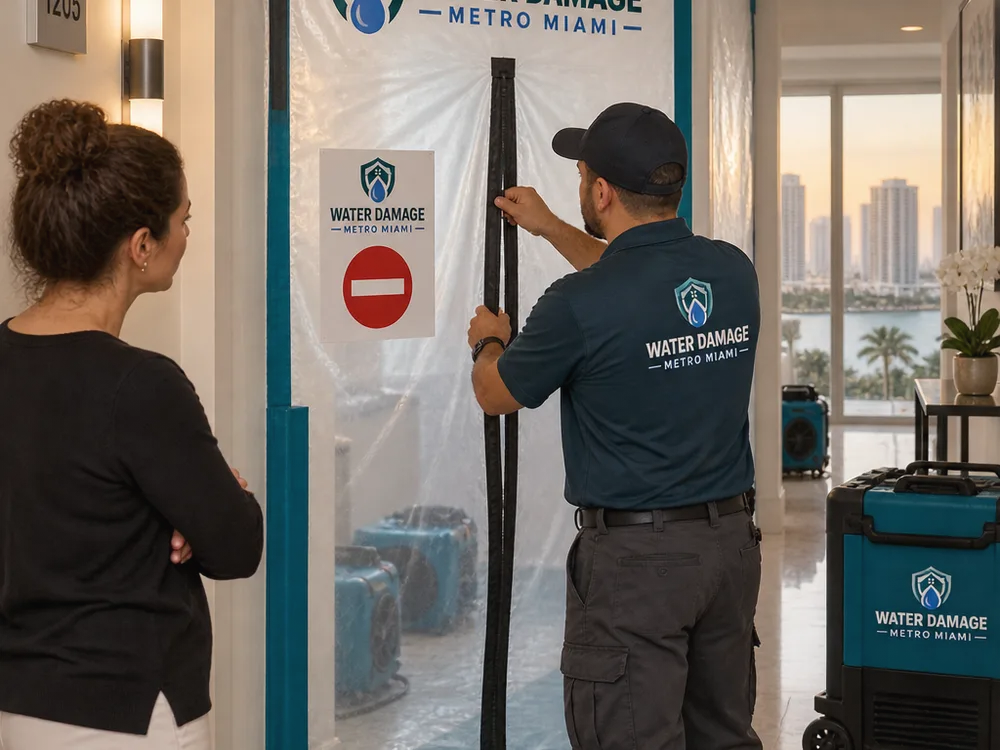
We isolate the affected area with critical barriers and controlled airflow so spores and dust stay where the work is happening, not throughout your home or office.
Serving Miami, Florida & surrounding areas
24/7 Emergency Response
If you smell a musty odor, see staining, or have had a recent leak, we contain the area fast, remove affected materials safely, and leave you with a clear plan to keep mold from coming back.
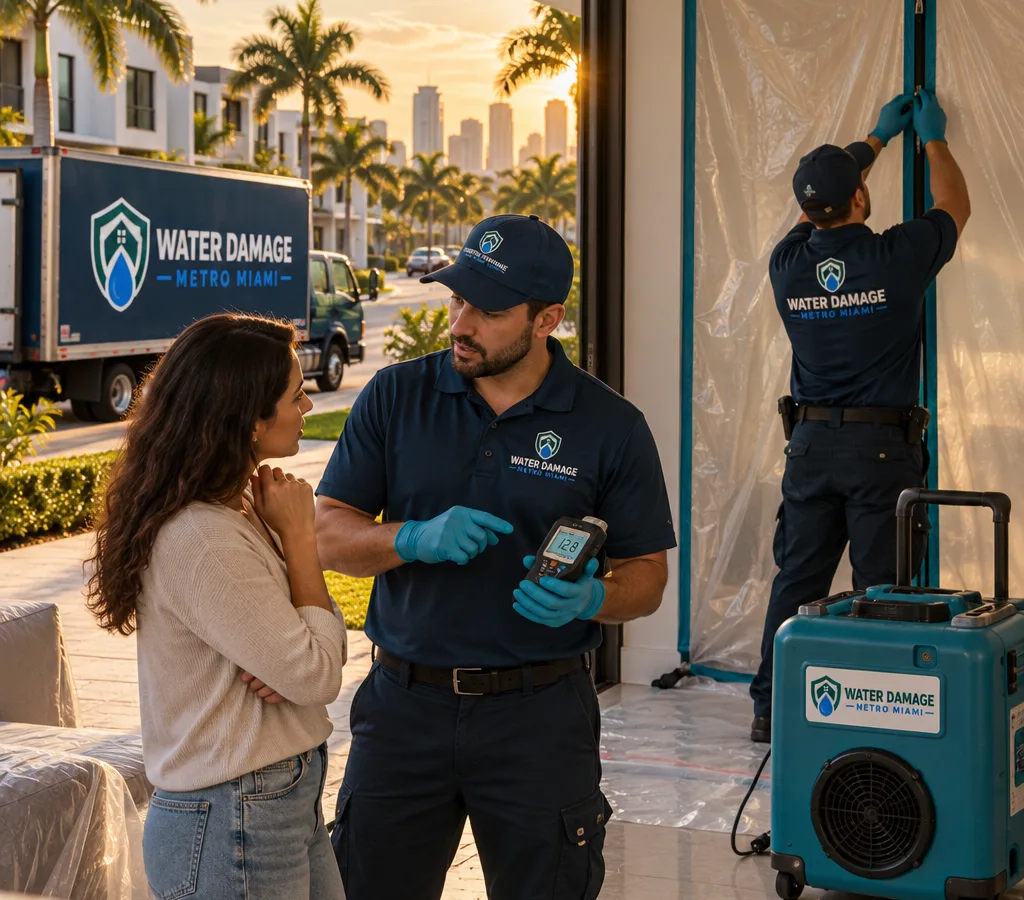
Fast, careful mold remediation for Miami homes and businesses
When mold shows up indoors, the goal is not to spray and hope. The goal is to stop the spread, remove what is contaminated, and fix the conditions that allowed growth in the first place. For mold remediation Miami property owners can trust, the work has to be methodical: proper containment, filtration, and verified drying.
We are Water Damage Metro Miami, and our team approaches Miami mold remediation the same way we would want it handled in our own property: with a written scope, clear safety steps, and straight answers about what needs to be removed versus what can be cleaned. As water damage restoration specialists serving Miami, FL, we also pay close attention to moisture sources that often sit behind visible mold, such as slow plumbing leaks, storm-related roof intrusions, or humidity trapped in wall cavities.
Miami’s heat and humidity mean mold can move quickly once materials stay damp. Condos and high-rises add shared walls, limited equipment access, and the need to keep work areas sealed so neighboring units are protected. Our process is built for those realities in homes, townhouses, and commercial suites.
We isolate the affected area with critical barriers and controlled airflow so spores and dust stay where the work is happening, not throughout your home or office.
Air scrubbers and HEPA vacuums are used to capture fine particulates while we clean remaining structural components that can be salvaged.
Drywall, insulation, baseboards, and other porous materials are removed when they cannot be cleaned to an acceptable standard.
We use moisture meters and practical inspection methods to locate damp building materials, because hidden moisture is a common reason mold returns.
You receive an easy-to-follow scope describing containment, removal, cleaning steps, and recommended corrections to the moisture source.
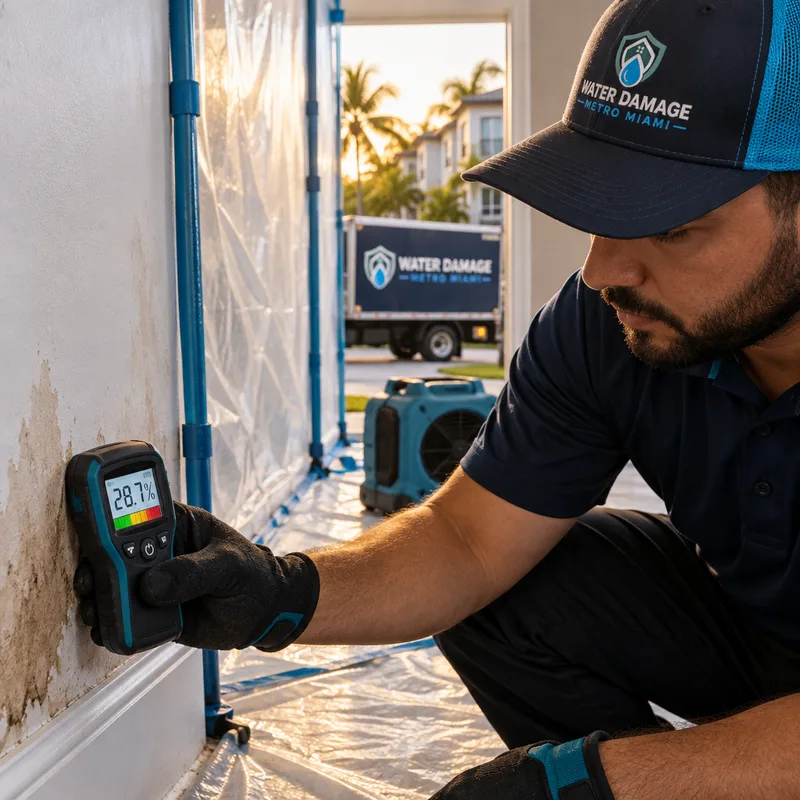
Mold is a symptom of moisture. In Miami, that moisture can come from a one-time event, such as a supply-line leak under a sink, or a steady condition like high indoor humidity, condensation at supply vents, or dampness behind a shower wall. Either way, visible spotting is usually not the full story.
Common situations we see:
In condos near Brickell or Downtown, odors can be the first clue because shared chases and utility penetrations let air move between cavities. In older neighborhoods like Coral Gables and Little Havana, multiple repair layers may hide past leaks that were covered instead of dried. In Miami Beach, salty air and constant HVAC use can contribute to ongoing condensation. A thorough remediation plan accounts for the building type, not just the spot you can photograph.
We assess visible growth, moisture conditions, and likely pathways. We outline what will be contained, removed, and cleaned, then review expectations for access and timing.
We set up barriers, establish negative air when appropriate, and place HEPA filtration so disturbed particles are captured during work.
Materials that cannot be reliably cleaned, such as heavily impacted drywall or insulation, are carefully removed and bagged for disposal.
We clean structural components that can be saved, use HEPA vacuuming for fine residues, and apply products suited to the surface and condition.
If the area is damp, we address drying needs and explain what must change to prevent recurrence, such as fixing a leak, improving ventilation, or managing indoor humidity.
We review the completed scope with you and answer questions about next steps, including any rebuild needs after material removal.
Most mold remediation in Miami typically ranges from about $1,500 to $6,500+, with small, contained areas often landing around $1,500 to $3,000 and larger multi-room or HVAC-adjacent projects commonly $4,000 to $10,000+ depending on access and rebuild needs.
Your final price depends on the affected square footage, how far contamination has spread into porous materials, how complex containment must be—for example, in condos—and whether drying equipment is required. The exact cost is confirmed after an on-site inspection and a written scope.
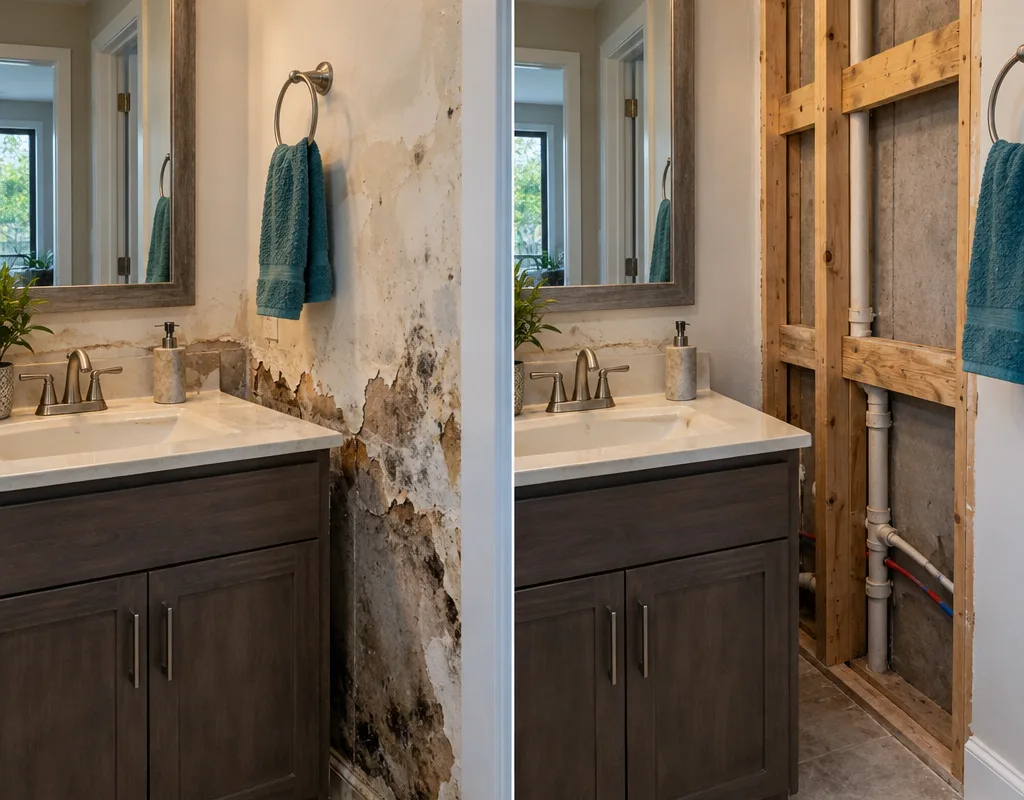
If you are dealing with a musty smell, recent water damage, or visible growth, getting a professional scope early helps prevent spread and keeps repairs straightforward.
Start time depends on the size and location of the affected area, but we prioritize active moisture situations and cases where containment is needed quickly. In Miami’s humidity, delays can allow damp materials to stay wet longer, so we focus first on isolating the area and controlling airborne particles while cleanup is completed.
Often, you can stay in the home if the work area can be fully contained and you can avoid that zone. If remediation involves a main living area, multiple rooms, or HVAC components, it may be safer and more comfortable to be out of the space while removal and detailed cleaning are underway.
Porous materials that are significantly affected typically need to be removed because they are hard to clean to a reliable standard. Non-porous or semi-porous surfaces may be candidates for cleaning and treatment, depending on the extent of growth and whether moisture is still present behind them.
Mold commonly returns when the moisture source is not corrected or materials remain damp inside cavities. In Miami, high indoor humidity, recurring condensation at vents, and slow leaks behind walls are frequent drivers, so remediation needs both removal or cleaning and a plan to keep the space dry.
Yes, and the main difference is containment and access. Condo work often requires tighter controls to protect shared spaces and neighboring units, plus coordination for elevator use, parking, and building rules so equipment and materials can be moved without disrupting others.
Testing is not always required to begin remediation when there is visible growth and a clear moisture issue. Many clients choose testing for documentation or when the source is unclear, but the immediate priority is still containment, safe removal where needed, and drying or moisture correction.
Tell us what you are seeing and where it is happening. We will schedule an inspection, explain what needs to be contained and removed, and provide a written scope you can trust before any work starts.
Call for Emergency Help