Containment-first setup
We isolate the affected area and control airflow so the rest of your property stays protected while removal is underway.
Serving Miami, Florida & surrounding areas
24/7 Emergency Response
Stop mold at the source with inspection-led cleanup, proper containment, and clear documentation for your home or business.
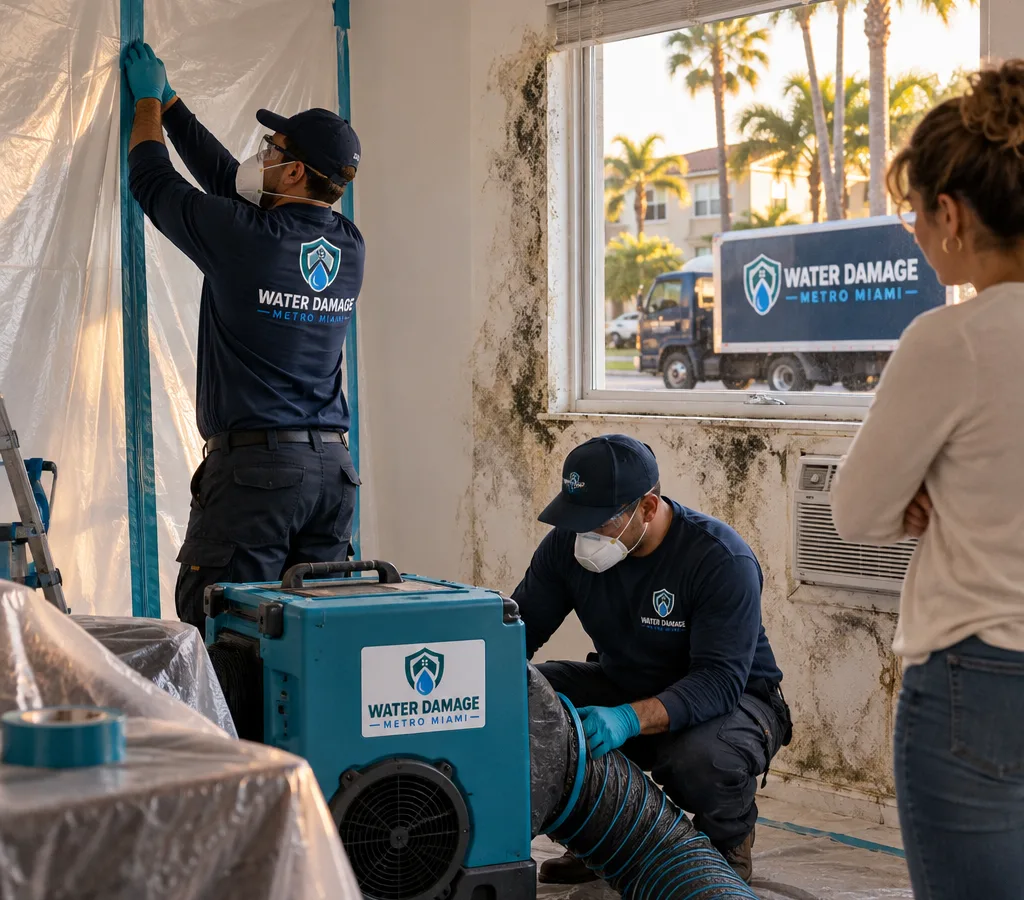
If you are searching for mold removal Miami property owners can trust, start with this: mold comes back when moisture stays. In Miami, that usually means a past leak, humidity-driven condensation around AC supply and return vents, or water intrusion after heavy rain. The safest approach is to inspect first, isolate the work area, remove contaminated materials that cannot be saved, and clean remaining surfaces with methods matched to the material.
Water Damage Metro Miami handles mold removal in Miami for condos, single-family homes, and commercial spaces. We work like Miami’s water damage restoration specialists because mold and moisture are tied together, and the plan has to address both. You will get a written scope covering what we found, what we are doing to fix it, and what needs to happen next, such as drying, repairs, or independent clearance testing if you choose.
Miami also has a lot of multi-unit living. In Brickell and Downtown, shared walls and stacked plumbing mean a small leak can affect more than one unit. In Coral Gables, older homes and additions can hide past moisture behind plaster, trim, or built-ins. In Little Havana, dense housing and frequent AC use can create recurring condensation spots. Wherever you are, we focus on containment and source control so the problem does not migrate to clean areas.
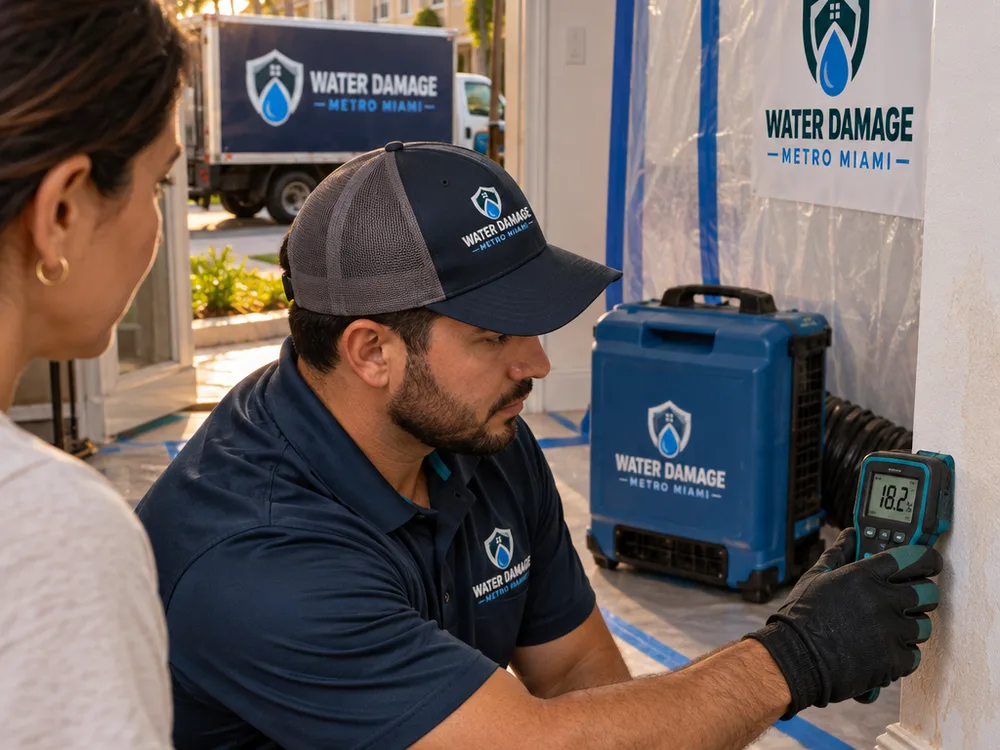
A professional miami mold removal job is more than spraying a product on a stain. It is a controlled demolition and cleaning project designed to keep spores from spreading.
Most projects include:
If you are also dealing with leak-related damage, our water damage restoration work often runs in parallel with mold cleanup to dry the structure before rebuilding begins.
We isolate the affected area and control airflow so the rest of your property stays protected while removal is underway.
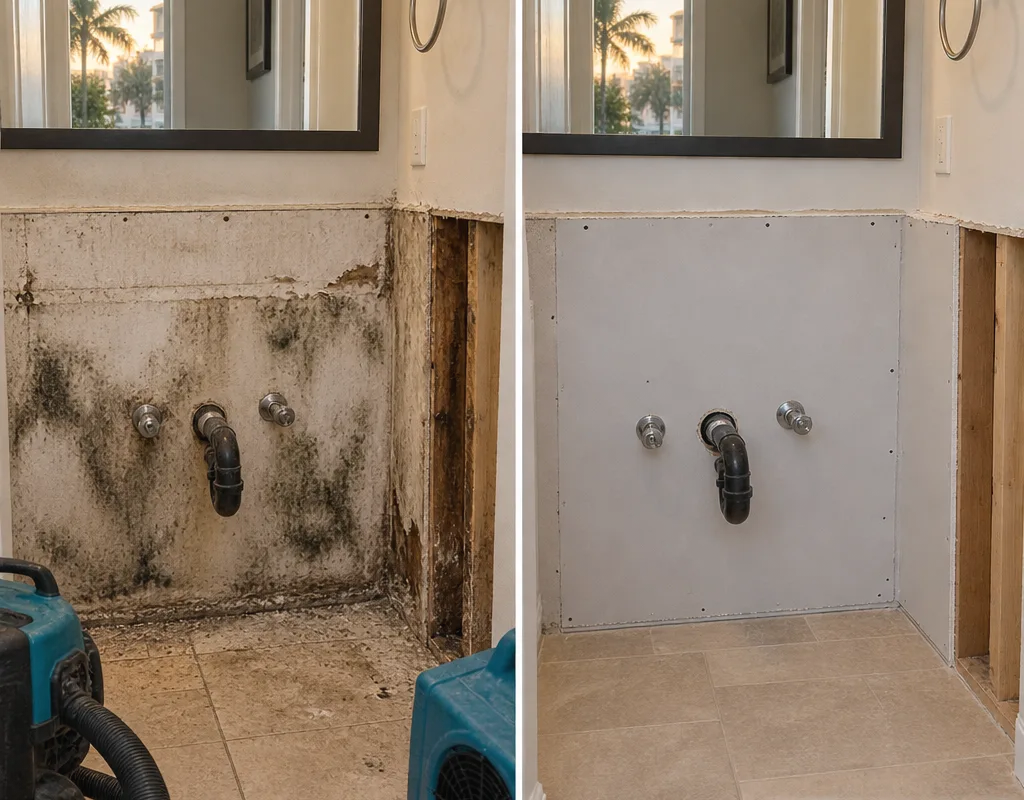
Porous materials that cannot be cleaned are removed. Non-porous and structural components are cleaned with methods that match the surface.
We look for the conditions that fed the growth, including leaks, trapped moisture, and condensation patterns, so the fix lasts.
You get a straightforward plan: what is affected, what is being removed, what is being cleaned, and what is needed before rebuild.
We handle condos, homes, offices, and retail spaces, with work plans suited to occupied buildings and access constraints.
We identify visible growth and likely hidden impact areas, then check moisture conditions that can keep feeding mold. If the issue started with a leak, we note what must be corrected before close-out.
We set barriers, protect floors and contents, and establish negative air pressure when appropriate. This is especially important in condos and multi-room layouts where air movement spreads particles.
We remove contaminated porous materials when needed and clean remaining surfaces using HEPA vacuuming and appropriate cleaning steps for wood, concrete, tile, and other substrates.
If anything is damp, we dry the structure and advise on humidity control. When you want third-party confirmation, we coordinate readiness for independent post-remediation verification.
We complete a detailed clean, remove containment carefully, and provide documentation of the scope performed so repairs and rebuild decisions are clear.
Mold removal in Miami typically ranges from about $800 to $6,000+, depending on how much area is affected and what materials need removal. A small, contained cleanup, such as limited drywall in a closet or under a sink, often runs $800 to $1,800, while multi-room or HVAC-adjacent projects with heavier containment and demolition more often fall in the $2,500 to $6,000+ range.
Final cost depends on square footage, whether porous materials must be removed, how hard it is to access the area—condos and tight mechanical closets matter—and whether drying equipment is needed. Exact pricing is confirmed after an on-site inspection and written scope.
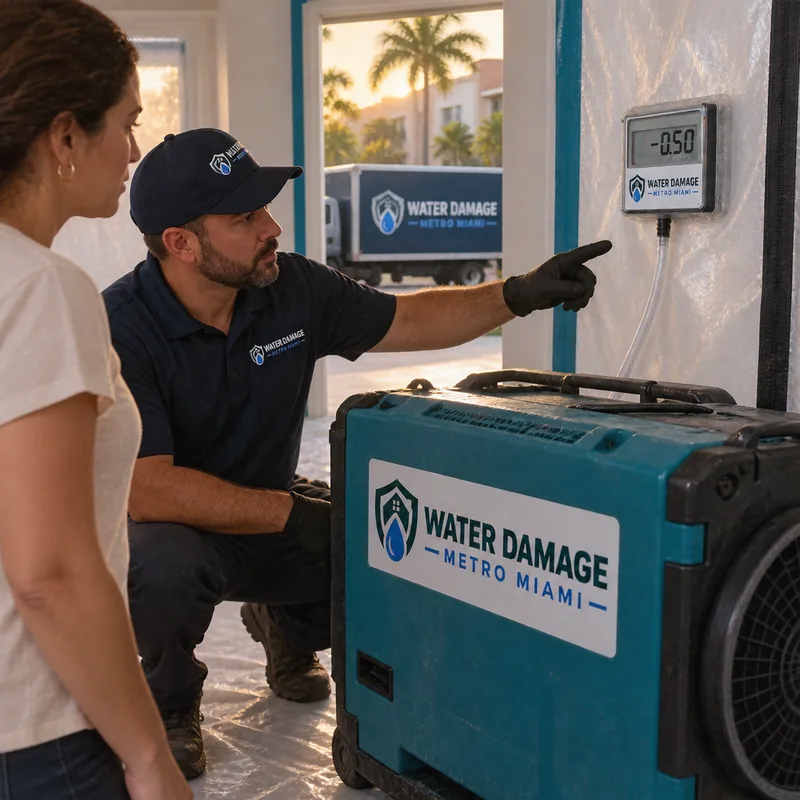
Start time depends on access and the size of the affected area, but many Miami mold removal jobs can begin quickly once the inspection is completed and the work plan is approved. If the space is actively wet, prioritizing drying and stopping the moisture source comes first because removal work in a damp environment is more likely to spread contamination and lead to regrowth.
Many mold removal Miami FL projects can be completed with you staying in the property, as long as the affected area can be contained and you can avoid that zone. If the growth is widespread, affects bedrooms, or involves HVAC distribution, temporary relocation may be the safer option until cleanup and drying are complete.
We most often find issues around under-sink cabinets, behind bathroom vanities, at baseboards near exterior walls, around windows, and near HVAC closets and drain lines. In Miami condos, stacked plumbing and shared wet walls can also create recurring problems, so we pay attention to adjacent units and building access rules during planning.
Porous materials like drywall, insulation, and carpet pad usually need removal when mold growth has penetrated them. Some cabinets and trim can be saved if the material is not swollen or delaminated and the affected surfaces can be accessed and cleaned properly, but we make that call based on what is behind and underneath, not just what is visible.
Yes. Mold removal in Miami Florida often follows plumbing leaks, AC drain backups, or storm-driven water intrusion. The key is pairing removal with moisture correction, which can include drying equipment and targeted demolition so trapped moisture is not sealed back in during repairs.
We focus on remediation work and documentation of the cleanup scope. If you want clearance testing, also called post-remediation verification, it is typically performed by an independent indoor air quality or mold assessment professional. We can coordinate timing so sampling happens after the area is cleaned, dry, and ready.
Keep the affected area closed off if possible, avoid running fans that blow air out of the impacted room, and do not disturb visible growth. If the issue is from an active leak, shut off the water source if it is safe to do so and note where moisture has traveled, including adjacent rooms and closets.
Tell us what you are seeing and where it is happening. We will inspect the area, explain the scope in plain language, and outline the safest path to a clean, dry space.
Call for Emergency Help